
Instead of the instinctive outcry that sentiments are hurt, the political leadership ought to avoid emotions and opt for reason for what has been suggested is good for us. They ought to cease stoking the fire and accept the reality, says Mahesh Vijapurkar.
When business interests begin deciding who will rule, democracy is in trouble, writes Mahesh Vijaypurkar
Just because the 14 elders spoke for us is not enough; each of us needs to add his voice and convert it into a clamour to be heard across the length and breadth of the country, says Mahesh Vijapurkar.
The postman used to be a joy to behold when he knocked on the door for he brought news. These days, the postman knocks on the door fewer times, and when he does, he brings the letter late, says Mahesh Vijapurkar.
If there is one single fault among the common people, it is the willingness to send the same kind of people time and again to Parliament and tolerate the venal ways of the people appointed to serve the citizens, says Mahesh Vijapurkar.
The city needs simple solutions, which look at each problem not in isolation, but as part of a totality called a city, its people, and their needs, says Mahesh Vijapurkar.
When citizens realise that things won't change, the lose faith in the system. That is the most dangerous thing to happen to a country, says Mahesh Vijapurkar.
The new chief minister, if backed by the Congress high command, can give Maharashtra a chance to recover from being looted by rent-seeking politicians, says Mahesh Vijapurkar.
Mahesh Vijapurkar urges Indian sportspersons to stand up and show contempt for the poor standards that appear the benchmark of the Commonwealth Games.
Why are we proud that India is a rapidly urbanising country when we do not know how to handle our cities, asks Mahesh Vijapurkar.
The biggest message is: the country is rather tired of the price spiral which has remained quite high for a long spell. The pocket is pinching and that counts, writes Mahesh Vijapurkar.
India was not involved in genocide in Bangladesh for it to shred the papers related to the 1971 war. Their release could have been controlled, even delayed, but to destroy it was a crime, writes Mahesh Vijapurkar.
Is Mumbai hostile enough to migrants that they prefer other destinations for living -- different, of course, from a livelihood -- and if so, what is perceived to be the real threat? Could it be the nativist rhetoric and some violence to substantiate it? Or is it mere housing as an issue? Mahesh Vijapurkar throws some light on Mumbai's changing demographic pattern
Even if Anna Hazare's protest is not an enduring solution, it would most certainly be a brake on the incorrigibility of the political and bureaucratic class, says Mahesh Vijapurkar.
The Shiv Sena may be on the back foot but it is far from finished, writes Mahesh Vijapurkar.
Mahesh Vijapurkar on a unqiue business venture in Thane that hopes to popularise cycling.
Mahesh Vijapurkar says the people who do not vote are often the people who complain the most about governance.
If what is said about them is only a perception, then lawmakers ought to bother about it and correct it by deeds, writes Mahesh Vijapurkar
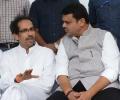
The Bharatiya Janata Party prefers to simply overlook the Shiv Sena's swipe and this has sent the latter into a sulk.
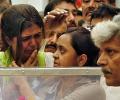
Pankaja Munde, who is the MLA from Parli, led the campaign for Gopinath Munde during the Lok Sabha elections against the single-minded, 'undo the Mundes' campaign by the Pawars and the Nationalist Congress Party. She is not set to take over his mantle, says Mahesh Vijapurkar.
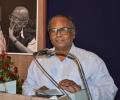
Mahesh Vijapurkar pays tribute to Aroon Tikekar, journalist, historian, author and an important intellectual voice of Mumbai, who passed into the ages on Tuesday.

The senior-most leader of the Shiv Sena brought it upon himself during the party's Dussera rally, says Mahesh Vijapurkar.
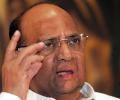
The NCP has seen the largest flow from its ranks to the other parties, more towards the BJP before the elections, even up to the last minute. The Sena and BJP together could, in power, become even bigger magnets. Disillusionment with the NCP leadership has been growing, which may have forced its hand, says Mahesh Vijapurkar.
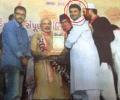
Modi and Rahul's Gandhi's case cannot be dismissed casually. Both are high visibility persons, subject to intense scrutiny, and above all, under heavy protection. So anyone meeting them is properly vetted, says Mahesh Vijapurkar
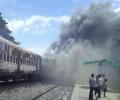
To Indian Railways, safety is not necessarily a systemic issue but something it attends to only on a case-by-case basis. If accidents were not to happen, the thought of safety would not arise, says Mahesh Vijapurkar
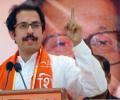
It is some consolation that the BJP top brass which had kept the Sena on the ice has now said that it would be happy to have the former partner in the government. What it did not say openly is that it would be on the BJP's terms, says Mahesh Vijapurkar.
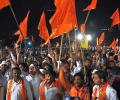
When political parties opt for alliances, it is to win an election, and if post-poll, to come to power by cobbling together the numbers to secure a majority. This has been a striking feature of Indian politics, throwing up such screens as 'coalition dharma' to hide all ills, including corruption, says Mahesh Vijapurkar.
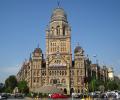
Given that Mumbai civic body deals with the lives of the people at the cutting edge, the better way would have been to agree to have giant television screens put up outside the civic headquarters to relay the proceedings live so the people are kept in the loop. It eliminates to an extent the distance between the people and their civic keepers but perhaps it is farfetched now, says Mahesh Vijapurkar.

Prime Minister Narendra Modi has ordered a clean-up of all central government offices. Mahesh Vijapurkar laments the pervading culture of shabbiness in government offices around the country.
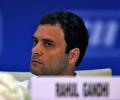
The one simple fact is that a government can be remote controlled but not an opposition. It needs to be kept on its toes, all the time enthusing its ranks to believe that it would win back the government in time. Would Rahul Gandhi be up to this challenge and provide proof that he does have the stuff, asks Mahesh Vijapurkar.

But by picking on Kejriwal for his threats, unfortunate as they are, and ignoring the appreciation he gets is missing the woods for the trees. Hopefully, the media would introspect and infuse more vigour, not mere hype, in democratic debates, says Mahesh Vijapurkar.
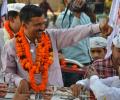
Perhaps Arvind Kejriwal got it right when he described the party as Shivji ki baraat. In other words, without the pejorative sense associated with it, a ragtag. New, and new to the business of government, it is faltering, notes Mahesh Vijapurkar.
Dismissing Kejriwal as an anarchist and trying to corner him on that score is unfair because the AAP is unlike any other party we have so far seen. It takes its strength directly from the people not just by way of votes but being participatory in its decisions, says Mahesh Vijapurkar.

Will the state forgo its lucrative excise collections in a bid to curb sales of liquor in the festive season, asks Mahesh Vijapurkar.

We continue to be what we were before 26/11-- sitting ducks, says Mahesh Vijapurkar.

The question we must ask is how do politicians get that wealth disclosed in the affidavits, says Mahesh Vijapurkar.

If the Indian Railways thinks it can get away with this sassy attitude, it is because it is, in a sense, a monopolist in the business of transporting people. The distances one has to cover, say from Thane or Virar to Mumbai is impossible by road provides railways the arrogance, says Mahesh Vijapurkar.
It is quite likely that the Parliament itself could now attract people's scorn. That would be terrible, and not the people but the politicians would be responsible, says Mahesh Vijapurkar.

By calling the Congress demand for covering lotus ponds absurd, ridiculous, the EC has done well. After all, even despite occasional lapses, there are wise men around, says Mahesh Vijapurkar.

These chat show performers contribute to the noise, not clarity, says Mahesh Vijapurkar.
